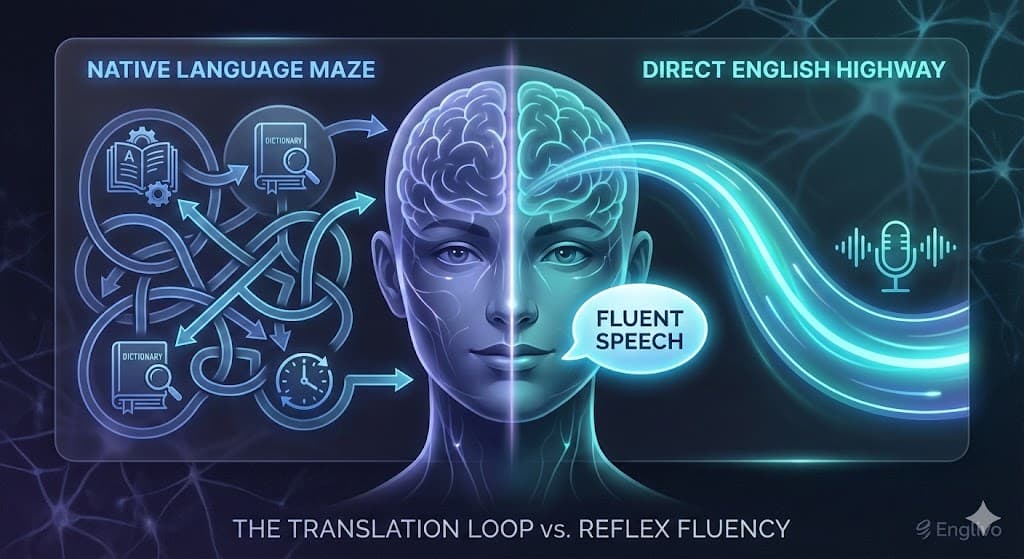
You’re in a meeting. You have a clear idea, maybe even a brilliant one. You know the vocabulary. You’ve studied the grammar for years. But when it’s time to speak, your brain launches a silent “search and replace” operation:
native language → English → grammar check → speech
By the time the sentence is ready, the conversation has moved on.
This isn’t a knowledge problem. It’s a processing problem - the translation loop. Many professionals experience this gap between “knowing English” and actually speaking without translating.
 Translation loop visualization
The Real Reason You’re Stuck: The Translation Loop
Traditional learning stores English in declarative memory- the part of the brain used for facts and rules.
But real conversation happens too fast for that system.
When you speak, this is what occurs:
- You hear English
- You convert it to your native language
- You build an answer in your native language
- You translate back to English
- Then you speak
This loop creates the painful lag that blocks English fluency for professionals.
The Driving Metaphor
When you first learned to drive, every action required thought:
mirror → signal → gear → clutch
Today you drive while thinking about dinner.
Fluency is the same: English must shift from an instruction manual → reflex system.
What CEFR Levels Actually Measure in Speaking
| Feature | B1 (Threshold) | B2 (Vantage) |
|---|---|---|
| Pause Ratio | Long planning pauses | Natural breathing pauses |
| Fillers | “uh/um” while searching | discourse fillers like “actually” |
| Effort | High mental load | Low sustainable load |
| Expression | Textbook style | Nuance & opinion |
The famous B1 to B2 speaking gap is almost always a translation gap.
3 Practical Ways to Break the Translation Habit
1) The 30-Second Sprint
Pick any object and describe it for 30 seconds, no editing.
Why it works:
Speed bypasses the “grammar police” in your brain.
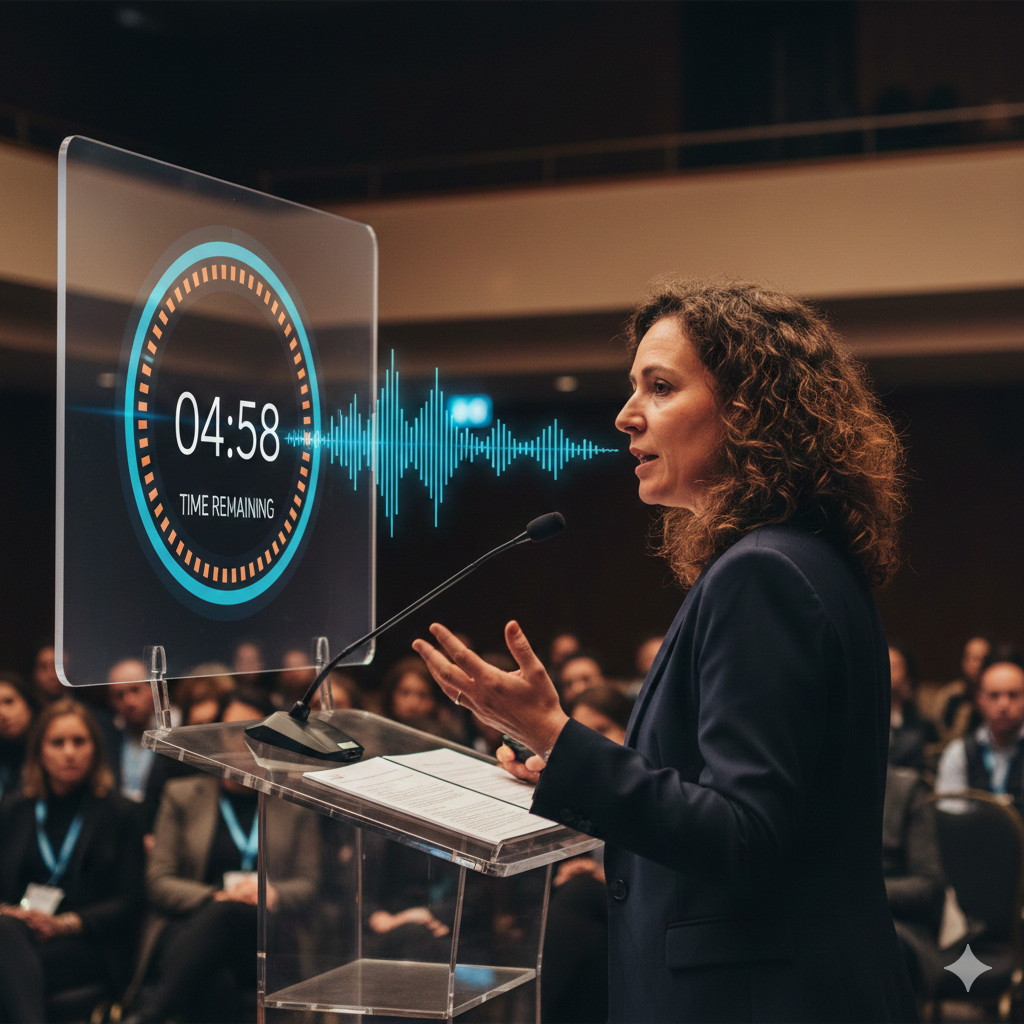 30 second sprint exercise
2) Label → Action
Instead of:
“coffee → I want coffee.”
Jump directly to actions:
brewing, sipping, waking up
Connect visuals → English verbs directly.
3) Functional Fillers
Replace silence with English thinking tools:
- “What I’m trying to say is…”
- “It’s something like…”
- “The idea is that…”
Is your translation loop holding you back?
See your real CEFR level →
How Englivo Detects This in Real Time
During AI Tutor and Live Practice, Englivo measures:
- Pause Ratio - mid-sentence gaps
- Filler Distribution - searching vs thinking
- Speech Velocity - rhythm stability
You can’t cross to B2 if pauses remain translation-driven - even with perfect grammar.
Ready to stop the mental lag?
Try this in Live Practice →
10-Minute Daily Plan
- Morning (2 min): narrate routine in English
- Work (3 min): replay one thought in English
- Evening (5 min): session with AI Tutor
Related Guides to Think Directly in English
-
See how this affects your CEFR score:
CEFR Speaking Test Secret: What Pauses Say About Your Level -
Practical daily routine:
The Professional’s Blueprint for Natural English Fluency
FAQ
Why do I translate in my head?
Because English is stored as information, not as a skill. Your brain chooses the safer native-language path.
Can I think directly in English?
Yes, through direct association and reflex-based training.
What level counts as fluent?
Professionally, fluency begins around B2.
How to move from B1 to B2?
Reduce pause ratio + expand connectors + build continuous flow.
Get personalized feedback on your fluency gaps
Unlock this with a coach →
Master the Curriculum.
Expert 1-on-1 guidance for English fluency, tailored to your goals.